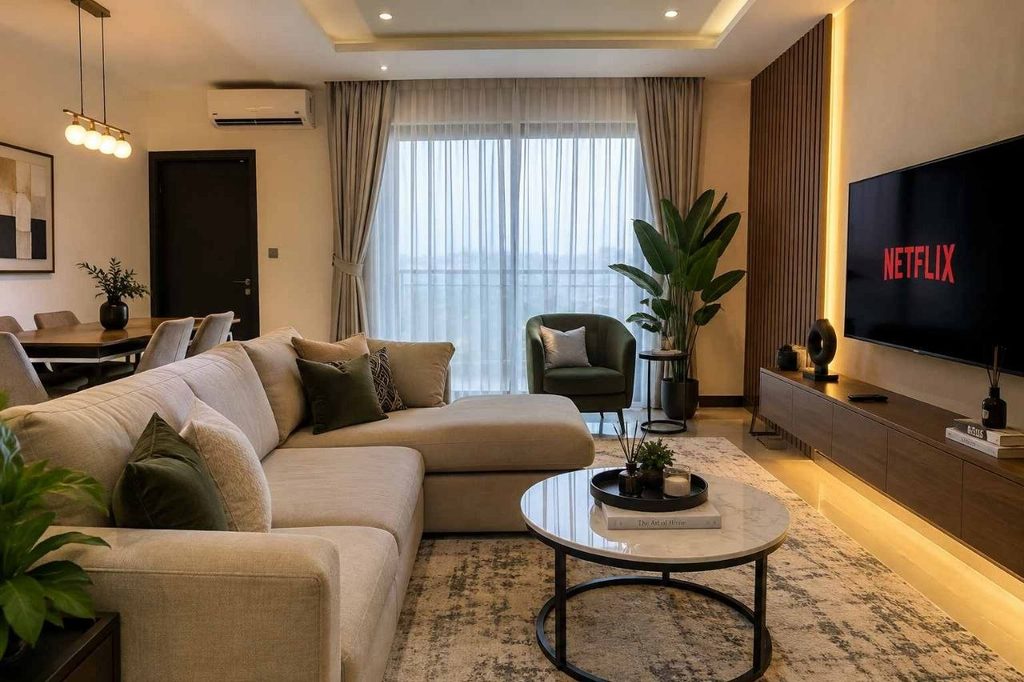
Two two-bedroom flats sit on the same street in Lekki Phase 1. They are similar in size, finishes and asking price. Yet one rents for ₦3.2 million a year and renews consistently, while the other stays vacant for two months before settling at ₦2.6 million.
The difference is not the location; it is how each property was designed and presented after purchase.
That is where rental yield in Nigeria becomes more than a calculation. Purchase price and rent matter, but so do layout, finishes, functionality and furnishing.
At Oak & Teak Interior, we design and furnish residential and commercial spaces across Nigeria, including properties intended for rental. We will explain what rental yield in Nigeria means, how to calculate it, what makes a good yield, and how design and furnishing can influence a property’s rental potential.
What Is Rental Yield in Nigeria, and Why Should You Care?
Rental yield in Nigeria measures the annual rental income a property generates as a percentage of its cost or current value. It shows how effectively a property is generating income, separate from any increase in its market value.
A property can appreciate while delivering a low yield if it stays vacant, earns below-market rent, or requires frequent repairs. For investors holding rental property in Nigeria, yield provides a practical way to assess actual rental income and property performance.
How to Calculate Rental Yield in Nigeria
To calculate rental yield, divide the annual rent by the property’s value and multiply by 100.
Gross rental yield = (Annual rent ÷ Property value) × 100
For example, if a one-bedroom apartment in Yaba is worth ₦35 million and earns ₦2.8 million in annual rent, its gross rental yield is 8%.
However, gross yield does not account for costs such as agency fees, service charges, maintenance, insurance or vacancy. Net rental yield factors in these expenses to give a clearer picture of the property’s actual rental income.
What Is a Good Rental Yield in Nigeria?
There is no single good rental yield in Nigeria. It varies by location, property type, purchase price and rental demand.
In general, smaller, well-located properties can produce stronger yields because they often generate higher rent relative to their purchase price.
For investors, a good yield should cover property expenses while leaving enough rental income to make the investment worthwhile. Location, vacancy, maintenance and service charges should all be considered alongside the headline yield.
Beyond the Numbers: What Actually Drives Rental Yield in Nigeria
Purchase price and rent are only two variables. In practice, five factors shape performance over the life of a rental:
- Location — proximity to jobs, schools, and transport shapes tenant demand and vacancy risk.
- Condition — a well-maintained unit lets faster and commands stronger renewals than one showing wear.
- Functionality — a layout suited to how the target tenant actually lives, whether a young professional, a family, or a corporate expat, reduces turnover.
- Tenant appeal — finishes, lighting, and storage that photograph and show well shorten the void period between tenants.
- Furnishing and overall experience — a unit that’s ready to move into, rather than a shell needing months of setup, commands both a faster let and a stronger rent.
This is really the sequence every rental property goes through: build, design, furnish, occupy, rent.
It’s the last three steps that most owners underinvest in, relative to the return they produce.
How Interior Design and Furnishing Increase Rental Yield in Nigeria
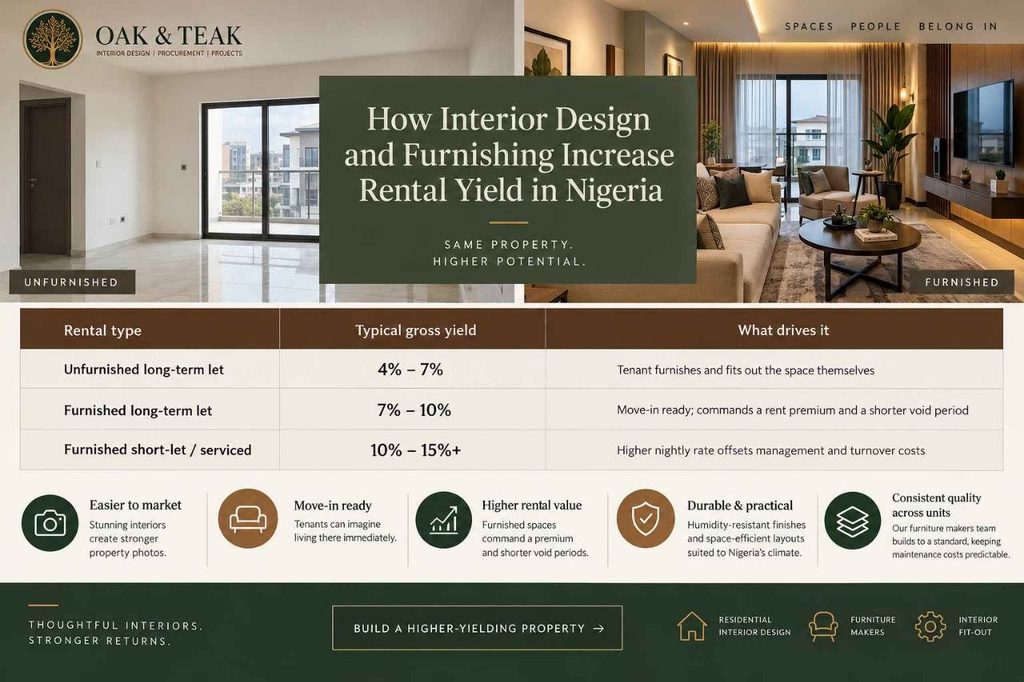
This is where many conversations about rental yield in Nigeria stop. A property’s rental income depends on more than its location. How well the space is designed, furnished and suited to its target tenant also matters.
Furnished and serviced properties can attract higher rents because tenants get a move-in-ready space without the cost and effort of furnishing it themselves. Research from Baay Realty also highlights furnishing as one factor investors can consider when looking to improve rental income.
| Rental type | Typical gross yield | What drives it |
| Unfurnished long-term let | 4% – 7% | Tenant furnishes and fits out the space themselves |
| Furnished long-term let | 7% – 10% | Move-in ready; commands a rent premium and a shorter void period |
| Furnished short-let / serviced | 10% – 15%+ | Higher nightly rate offsets management and turnover costs |
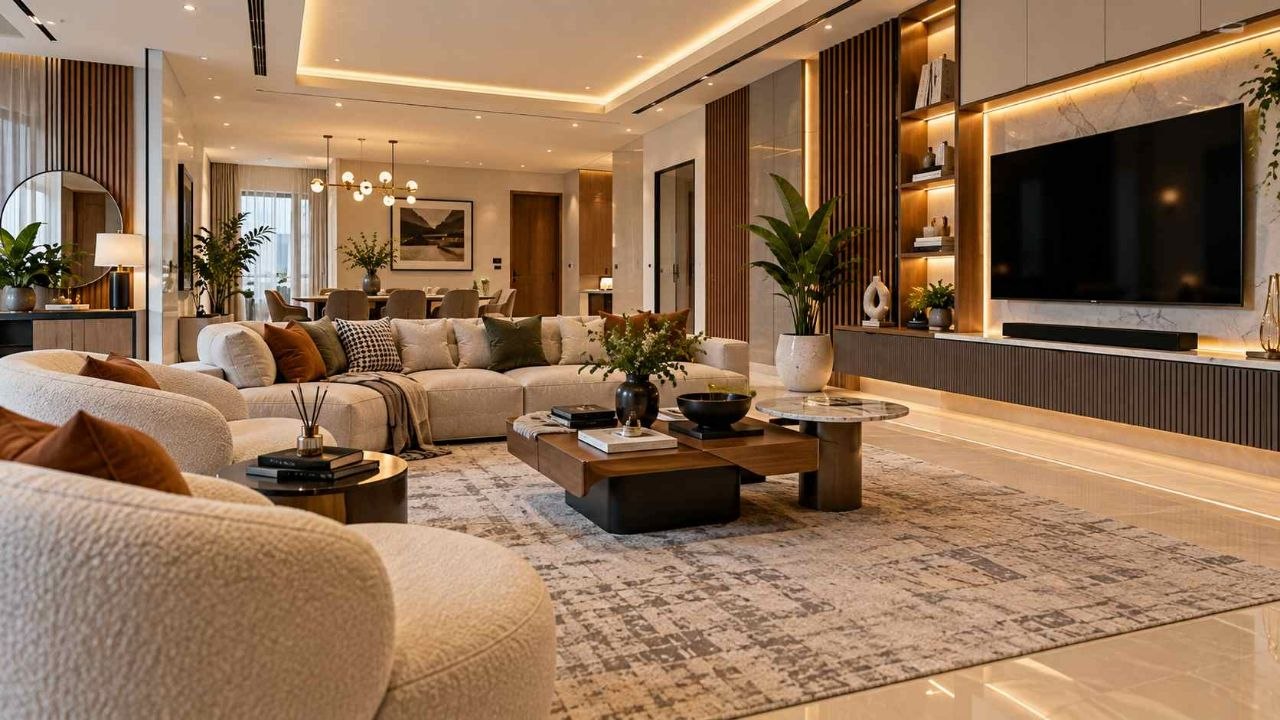
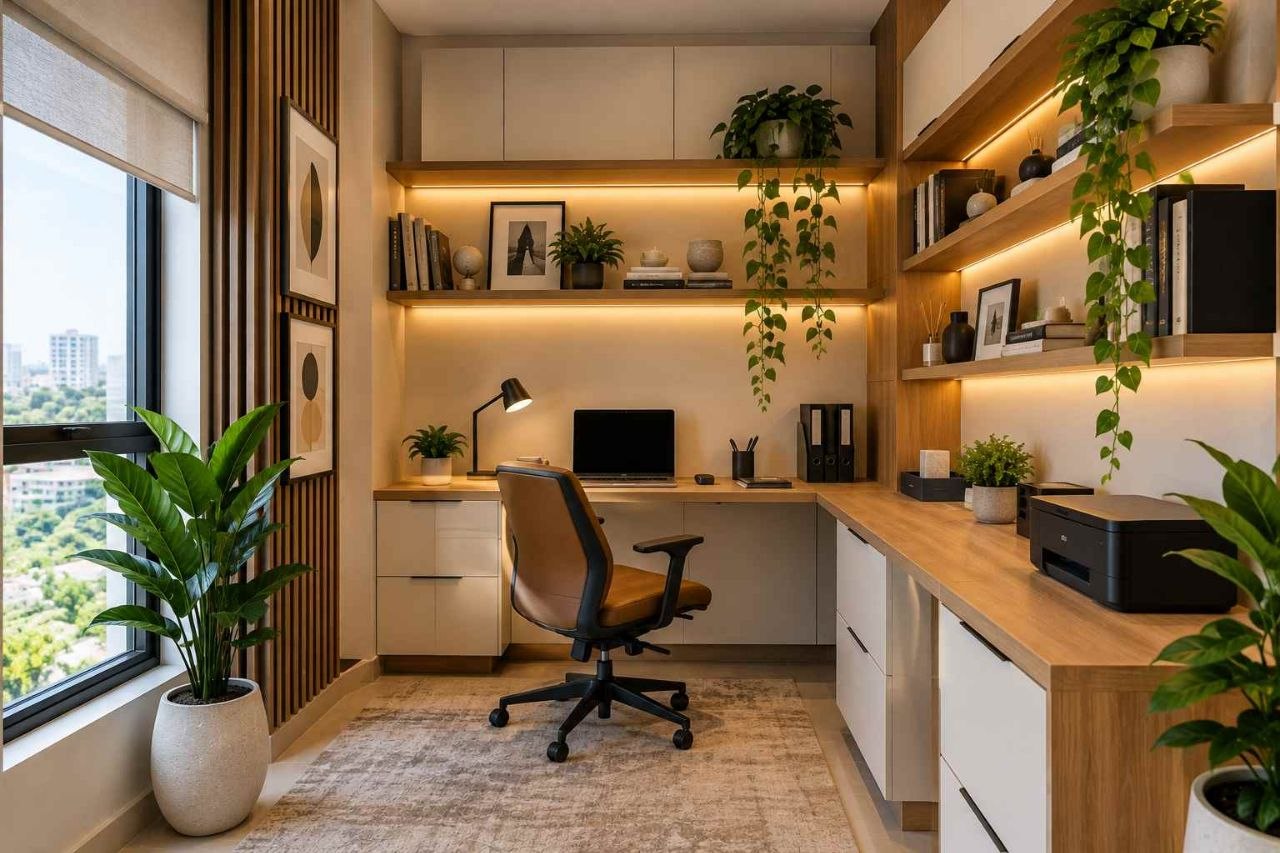
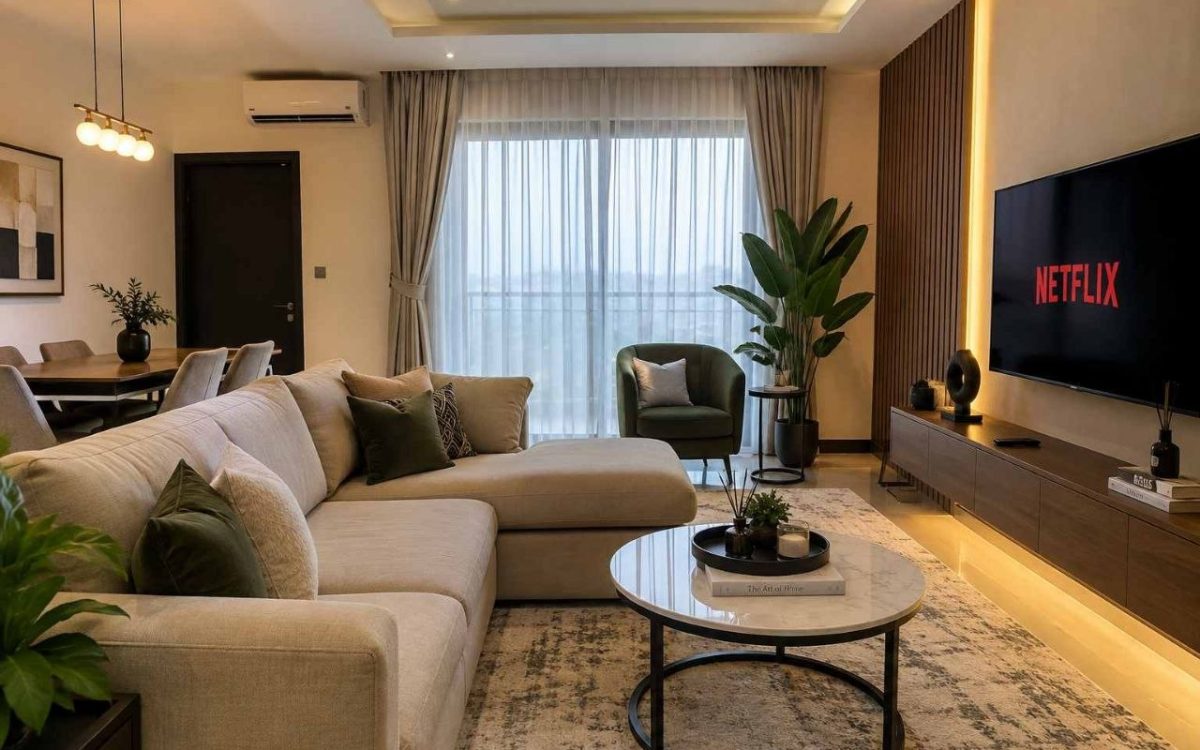
Good rental property interior design can make a unit easier to market, help prospective tenants picture themselves in the space and reduce the cost of setting it up.
This means choosing durable finishes, practical layouts and space-efficient furniture suited to the property’s target market. Through its residential interior design and interior fit-out services, Oak & Teak Interior helps property owners turn these decisions into finished spaces. For multiple rental units, its furniture makers can also create consistent furniture across a portfolio.
For more on how design can contribute to property value, explore Seven Ways Luxury Interior Design Services Boost Property Value in Nigeria. If you’re considering custom furniture, Why Nigeria’s Best Homes Use a Bespoke Furniture Company explores the role of bespoke pieces in residential interiors.
How Much Does It Cost to Furnish a Rental Property in Nigeria?
Furnishing costs vary by the property’s size, finish level and scope of work. A light refresh will cost less than a full interior design for a rental property project, but the better question is what the investment can contribute to rental income and reduce vacancy over time.
Instead of focusing only on the upfront cost, investors should consider the potential rental yield in Nigeria after furnishing, renovation and ongoing maintenance.
For owners who need help planning the right level of investment, Oak & Teak offers interior design consultation to assess the property’s needs and develop a practical furnishing approach.
For multiple units, Inside an FF&E Procurement Plan explains how furniture procurement can be planned and phased across a project.
Choosing an Interior Design Partner to Improve Your Property’s Returns

Not every interior designer approaches a rental investment the same way. Look for a partner who understands your target tenant, holding period and property goals before recommending finishes, furniture or layouts. It also helps to review completed projects that are similar to what you are planning.
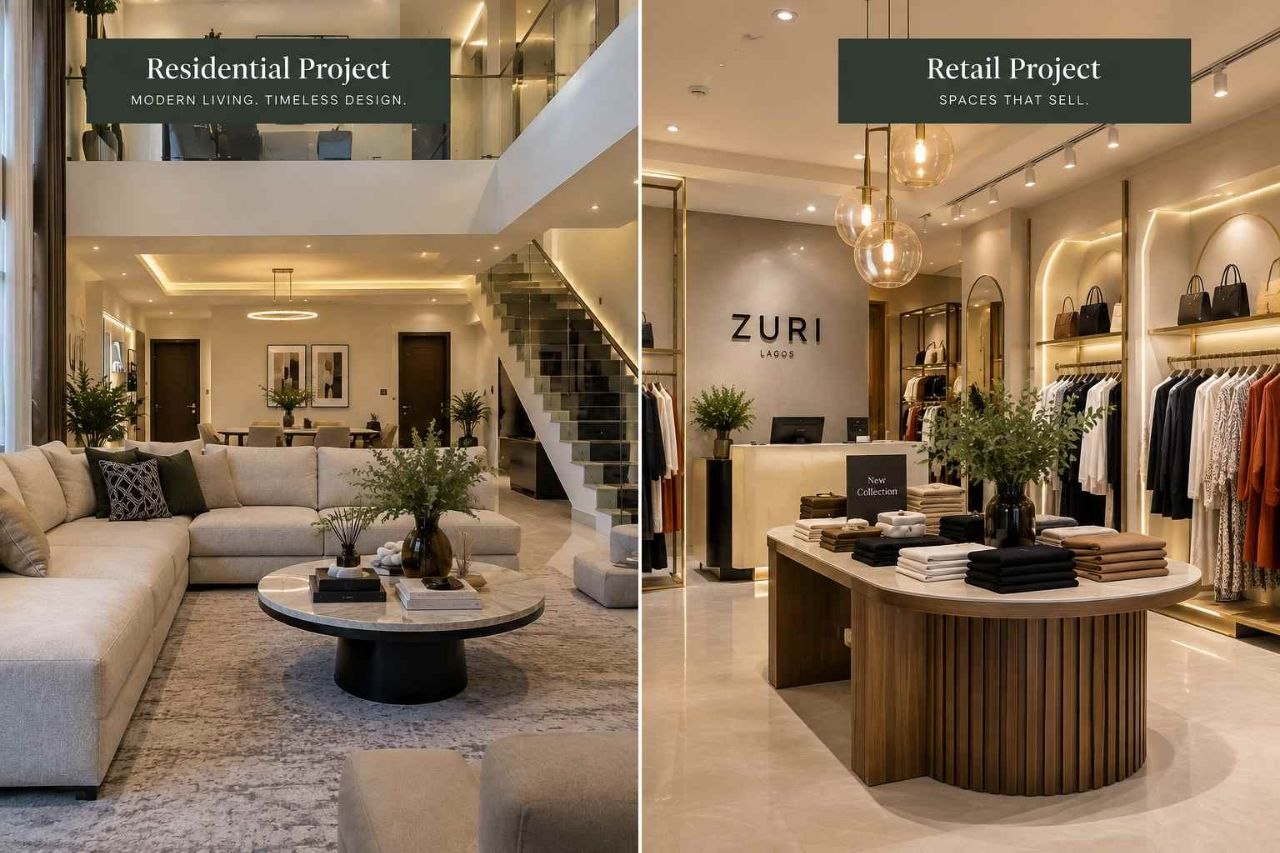
Oak & Teak Interior has delivered residential and commercial projects in Nigeria and internationally, including corporate offices, banks and hospitality spaces. Our portfolio gives you a closer look at the range of projects we have completed.
The right approach will also depend on the condition of the property and the work it needs. For an existing rental, The Interior Design Process in Nigeria explains how a project moves from planning to completion, while a turnkey approach may be suitable when you need design, procurement and execution handled together.
Cost is another consideration. Understanding how professional design can affect procurement, durability and long-term property value can help you define the right scope. We explore this in Can an Interior Designer Save You Money? Here Is Exactly How.
For larger projects, Turnkey Interior Design in Nigeria: What It Is and How It Works explains how this delivery model works.
If you are ready to discuss your property, book a consultation with our team or explore our residential portfolio for examples of our work.
Frequently Asked Questions
What is the average rental yield in Nigeria?
Average rental yield in Nigeria sits in the mid-to-high single digits gross for most formal urban markets, with prime areas like Ikoyi and Victoria Island closer to 4%–7% and mid-market corridors such as Yaba and Surulere reaching 8%–12%. Net yield, after costs, typically runs a few points lower.
How do you calculate rental yield in Nigeria?
Divide annual rent by the property’s current value and multiply by 100 for gross yield. Subtract service charge, agency fees, maintenance, and expected vacancy from the rent first to get net yield, which better reflects real returns.
What is a good rental yield in Nigeria?
A good rental yield in Nigeria is one that clears financing and running costs with room to spare, generally upward of 6%–7% gross for most residential holds, though the right benchmark depends on location and tenant type.
Does furnishing a rental property really increase rental income?
Yes. Furnished and serviced units generally let faster and at a premium over unfurnished equivalents, because they remove setup cost and effort for the tenant, though the furnishing spend should be weighed against the achievable rent uplift for that specific unit.