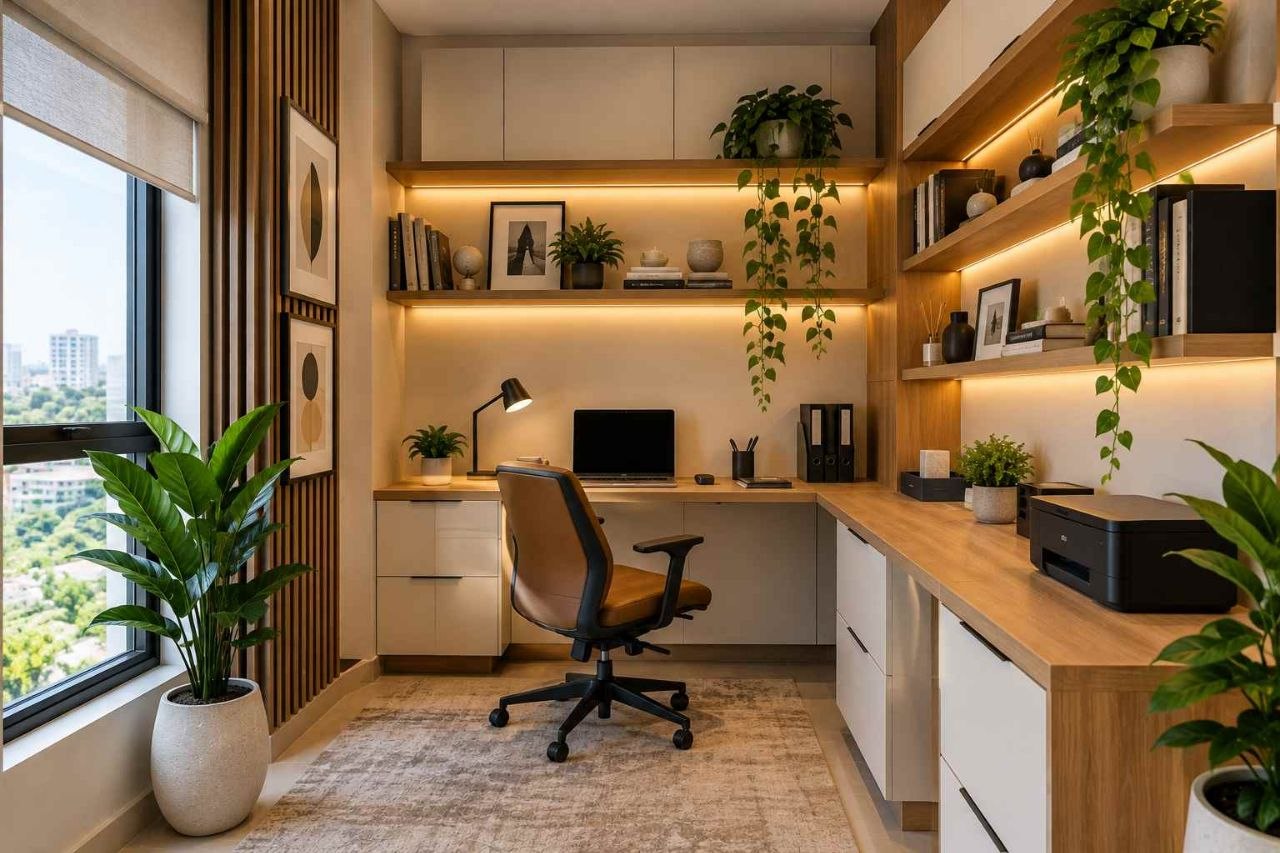
Most people start home interior design the same way: a saved folder of living rooms, a Pinterest board of kitchens, a screenshot of a bedroom that isn’t quite theirs but is close. Months later, the folder is full and the house is exactly as it was.
The gap usually isn’t taste. It’s that inspiration boards rarely account for what a Nigerian home actually needs, humidity-proof materials, generator-friendly lighting plans, a budget in naira rather than a vague “design goals” board, and a real person to execute it. House interior design in Nigeria has to bridge that gap, not just add to the folder.
This guide follows that bridge in order: ideas for each room, how to make a small home feel bigger, what it actually costs, how to choose a designer, and what the process looks like once you start.
Home Interior Design Ideas, Room by Room
The best home interior design ideas for a modern Nigerian house share a few things in common. They let in natural light and air. They also use materials that handle heat and humidity well.
Good design should also leave room for local character. Think Ankara accents, indigenous wood and handmade ceramics. These details can create a home that feels Nigerian rather than copied from a climate-controlled house elsewhere.
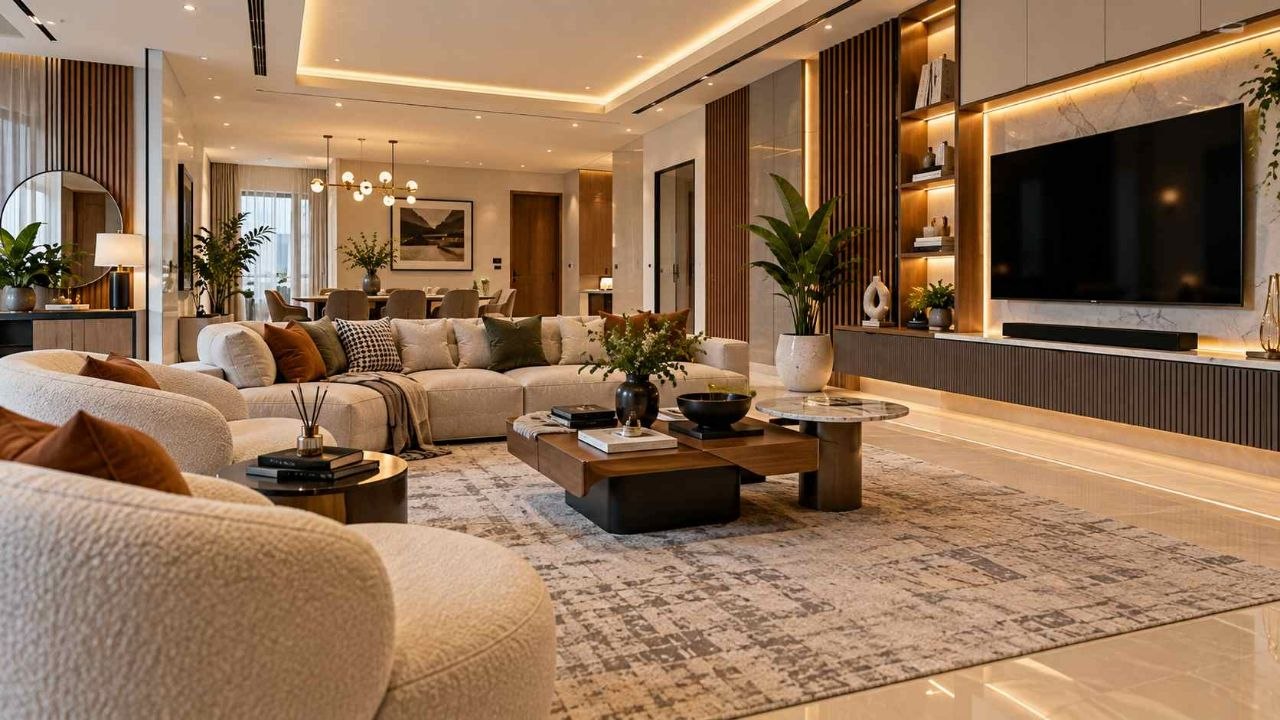
Living Room Interior Design
A living room works when it supports how you actually use it, not just how it photographs.
- Modular or sectional seating works well when the room doubles as an entertaining space. You can reconfigure it for a small gathering or a full house
- Layered lighting works better than relying on one central fitting. Use ambient, task and accent lighting where needed. This also makes generator and inverter planning easier in Nigeria
- A feature wall or gallery arrangement instead of filling every wall, which reads as more considered
- For simple living room interior design, start with a neutral palette. Add one or two statement pieces, a rug or a piece of local art. This approach can stay relevant longer than trend-heavy decor
In a duplex, the living room often sits at the centre of the staircase sightline. Duplex house interior design should therefore treat it as an anchor for the ground floor. It should feel connected to the other spaces rather than isolated.
Bedroom and Master Bedroom Interior Design
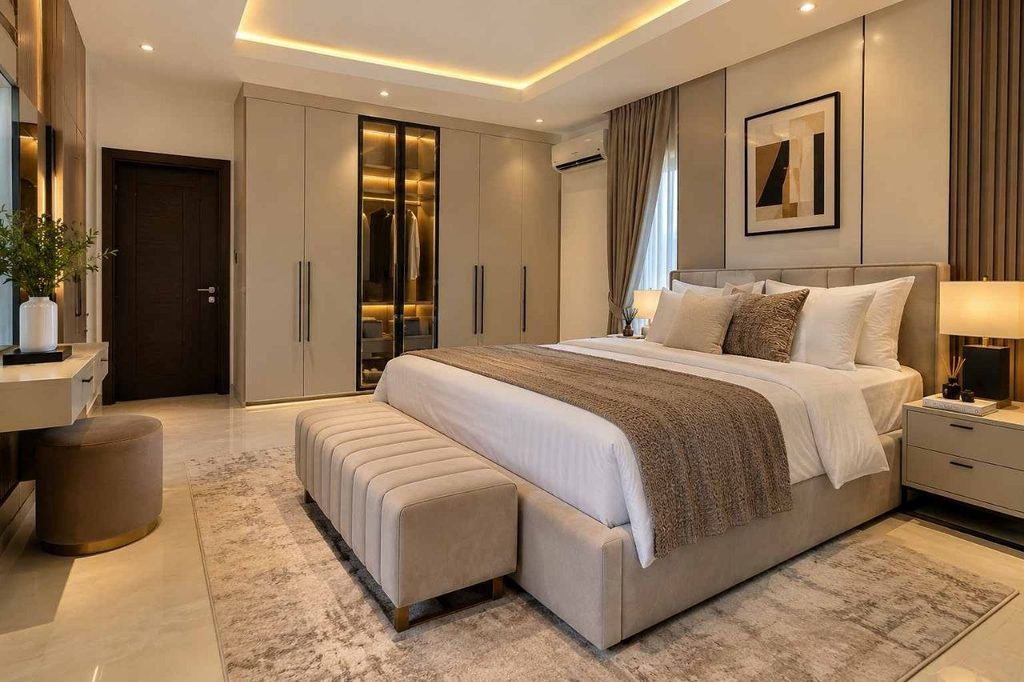
Bedroom interior design in Nigeria has to solve practical problems that Pinterest boards rarely show. Clothes and linens need protection during the rainy season. The room must also block heat and light without losing proper ventilation.
- Built-in wardrobes with ventilation gaps, which protect fabric far better than freestanding units in humid months
- Blackout-lined curtains that still allow the window to open, rather than sealed blinds that trap heat
- For master bedroom interior design, function should come before excess furniture. A small seating nook or desk can add useful space. A clear path to the ensuite also improves movement around the room.
Kitchen Interior Design
Kitchen interior design in Nigeria must account for local cooking habits. Heat, oil and longer cooking times can put extra pressure on ventilation and surfaces. Imported kitchen designs do not always account for these conditions.
- Strong extraction above the cooker, not decorative canopy hoods with weak motors
- Durable worktops such as quartz or granite over laminate, which doesn’t hold up to hot pots and oil over time
- Deep, organised storage can accommodate bulk-bought produce and dry goods. This is useful for households that buy groceries in larger quantities
For modern kitchen interior design, an open-plan layout can work well for entertaining. It connects the kitchen to the dining area and creates a more social space.
A semi-enclosed layout offers a different benefit. It helps contain heat, smoke and noise. Decide on the layout early, before the kitchen units are fitted.
Making a Small Home Feel Bigger
You can’t add square footage with paint and furniture, but you can change how big a small house feels, and in Nigeria’s heat, the same choices that create visual space usually also help the room feel cooler.
- Light, reflective wall and floor tones, which bounce daylight further into the room instead of absorbing it
- Mirrors placed opposite a window or light source, doubling the sense of both light and depth
- Furniture with visible legs, pulled slightly away from the walls, rather than bulky pieces pushed into corners
- Multi-purpose furniture, a storage ottoman, a bed with drawers, so fewer separate pieces compete for floor space
- One or two larger, well-chosen pieces instead of many small ones, which reads as intentional rather than cramped
These same principles apply whether it’s a one-bedroom flat in Yaba or a compact bungalow; the goal is always fewer, better-placed things rather than more decoration.
Turning Ideas Into a Plan: What Home Interior Design Costs in Nigeria
Home interior design cost in Nigeria does not have one fixed figure. Any guide that gives you a single price without considering the property is oversimplifying the project. Several pricing models are common, depending on the size and scope of the work.
- Flat fee per room: Common for single-space projects such as a living room or bedroom.
- Rate per square metre: Often used for full-apartment or whole-house projects.
- Percentage of the total project cost: Usually applies to larger or fully bespoke projects. The designer’s fee scales with the materials, furniture and overall scope.
- Hourly or consultation fee: Suitable for homeowners who need professional direction but plan to manage the execution themselves.
Full house interior design cost depends on several factors. These include the number of rooms, the type of furniture, the level of customisation and whether materials are locally sourced or imported.
Interior design cost in Nigeria can also vary by location. Lagos and Abuja may have different labour and logistics costs from Port Harcourt and other markets.
Luxury home interior design cost in Nigeria is usually higher than a standard project. Bespoke furniture, premium finishes and turnkey delivery can all increase the overall investment.
How to Choose an Interior Designer for Your Home in Nigeria
Choosing an interior designer for your home in Nigeria starts with a few practical checks. You can confirm most of them during your first conversation.
- Review similar projects: Ask to see completed projects that match the size and scope of yours. A single-room project requires different portfolio experience from a full house.
- Understand the process: Confirm whether the designer handles design, furnishing and fit-out through one process. Find out if they rely on separate contractors for different stages.
- Ask about materials: Find out how they select materials for Nigeria’s climate. A material may look good in a rendering but perform poorly in heat or humidity.
- Request a written scope: Get the project scope, deliverables and timeline in writing before work begins. Do not rely only on a verbal estimate.
- Assess communication: Pay attention to how clearly the designer communicates from the start. Good communication can make the project easier to manage.
If you are comparing firms, you can search for interior design companies in Lagos, Abuja and Port Harcourt.
What This Looks Like in Practice
This is usually the point where ideas either turn into a real project or stay a folder of screenshots, so it’s worth seeing what a full process actually looks like.
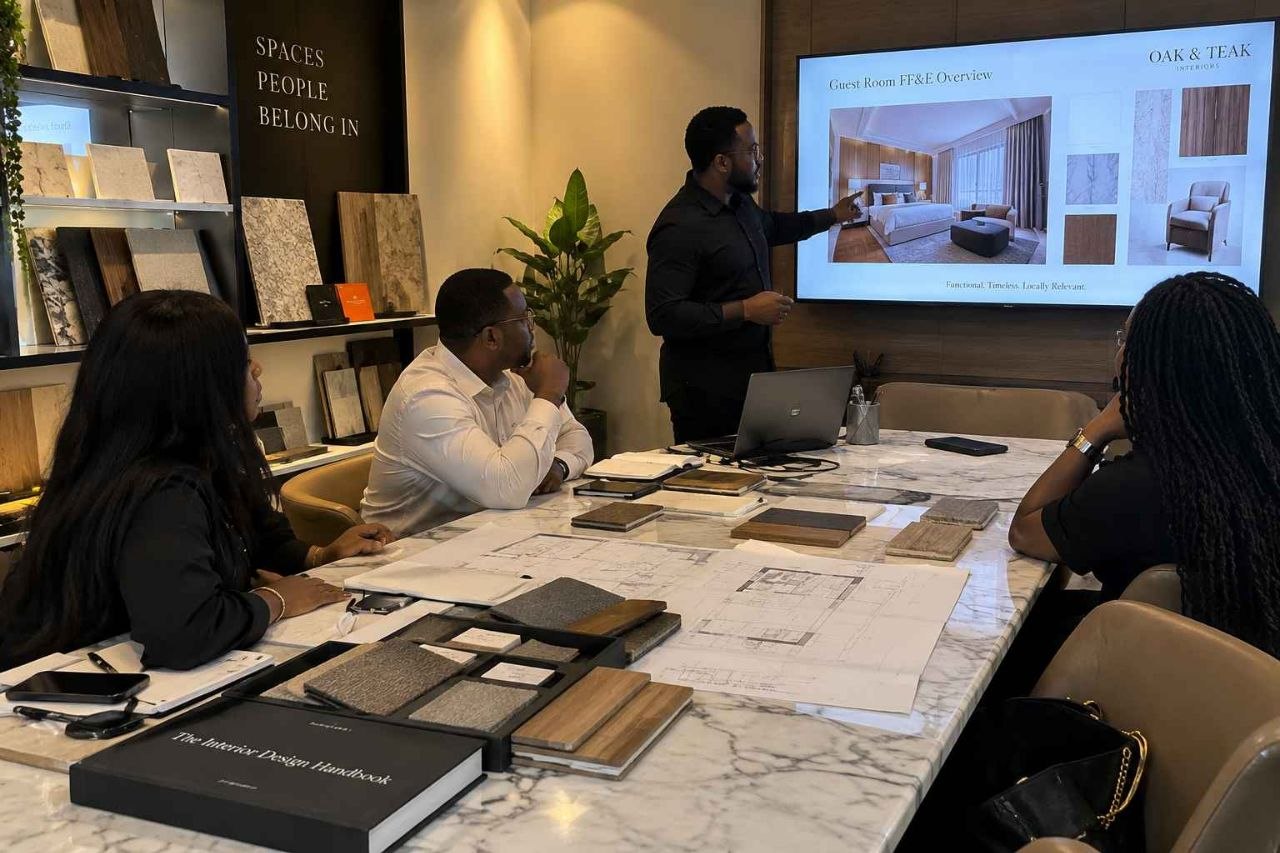
At Oak & Teak Interior, a home interior design project typically moves through five stages: an initial consultation to understand the household and budget, a concept and mood board stage, material and furniture sourcing chosen for durability in the Nigerian climate, fit-out and installation, and a final styling and handover. Founded in 2013, the team has completed projects across Lagos, Abuja, and Port Harcourt, as well as for Nigerian clients abroad in the UK, Canada, and Dubai.
Two things tend to matter most once a project is underway: whether residential interior design and bespoke furniture are handled under one process rather than separate contracts, and whether materials are actually specified for local conditions rather than a catalogue photo.
You can browse completed residential projects in our portfolio to see the range, from single rooms to full houses, before deciding what scope is right for yours.
Ready to Move From Ideas to a Finished Home?

A folder of home interior design ideas is a good start. A written scope, a realistic budget, and a designer who can execute both are what actually finish the room.
Book a consultation to talk through your space and budget, or browse our full portfolio first to see what’s possible before you commit.
Frequently Asked Questions
What is the average cost of home interior design in Nigeria?
There isn’t a single average, cost depends on the pricing model (per room, per square metre, or a percentage of project cost), the city, and whether furniture is bespoke or off-the-shelf. A single-room refresh and a full-house turnkey project sit at very different ends of that range.
How much does it cost to design a house in Nigeria?
A full house costs meaningfully more than a single room, since it scales with room count, material specification, and furnishing. Most firms price full-house projects per square metre or as a percentage of total project cost rather than a flat fee.
How much does luxury home interior design cost in Nigeria?
Luxury projects sit above standard pricing because of bespoke furniture, higher-grade imported and local materials, and full turnkey delivery, design through furnishing through installation, rather than design advice alone.
How do I choose an interior designer for my home in Nigeria?
Check their portfolio at a similar project scale to yours, confirm whether they handle design, furnishing, and fit-out together, and get a written scope and timeline before work starts. How clearly they communicate in the first conversation is usually a reliable preview of the rest of the project.
What are the best home interior design ideas for a modern Nigerian house?
Ideas that let in light and air, use materials suited to heat and humidity, and incorporate local texture, wood, textiles, ceramics, tend to outlast trend-driven looks copied from a different climate. The right idea also depends on the room: a living room built for entertaining needs different choices than a bedroom built for rest.
How can I make a small house look bigger with interior design?
Light, reflective tones, mirrors placed opposite a window, furniture with visible legs pulled off the walls, and a few larger pieces instead of many small ones all create a stronger sense of space than adding more decoration. In Nigeria’s climate, most of these choices also help a room feel cooler.