
Your friend told you plainly, “Hire a designer before you start.” You had a vision. You had already mapped out your budget. On top of that, you had access to markets and a contractor who came recommended. What could go wrong?
Three months into the renovation, the list of what went wrong was long enough to read over dinner. The tiles you bought were a slightly different shade under artificial light than they appeared in the shop, so the grout lines were now a permanent reminder of the batch difference. The sofa you ordered from a supplier in Trade Fair was too wide for the sitting room once the television unit was in place. The electrician had run the points in the most convenient positions for himself, not for the room, so every socket in the master bedroom sat on the wall opposite the bed, about as useful as a socket in a cupboard. The living room needed two rounds of repainting because the first color looked completely different from the sample card, while the second barely improved the result.
By the time the renovation wrapped, you had spent considerably more than the original budget. A meaningful portion of that extra spending went to correcting decisions a designer would have made the first time, for a fee that would have been a fraction of what the corrections cost. Your friend, to their credit, never said a word. They waited for you to raise the question. This guide is for every homeowner still weighing that decision. So, can an interior designer save you money? The answer is yes, and the proof often appears in the costly mistakes, unnecessary rework, and budget overruns that proper professional planning could have prevented.
Can an Interior Designer Actually Save You Money?
Question:Can an interior designer actually save you money?
Answer:Yes, an interior designer saves you money by preventing the costly mistakes that inflate renovation budgets in the first place. They do this through precise budget planning, smart material selection, established supplier relationships, and project coordination that eliminates expensive rework.
Most people think of interior design as an added cost layered on top of renovation spending. The reality is closer to the opposite. The fee you pay a designer is almost always smaller than the combined cost of the mistakes you would make without one.
Consider the most common renovation story in Nigeria: a homeowner buys tiles before confirming quantities with anyone qualified to measure. They end up short, return to the supplier, discover that the supplier has sold out the original batch, and spend more on a slightly different shade that does not match. That single mistake costs money, time, and the specific kind of frustration that makes you reassess every decision you ever made.
An interior designer calculates the exact quantity, orders with an appropriate buffer, and specifies a single consistent batch from a single supplier before work begins. The outcome is not just a better-looking finish. The designer’s planning gives you greater control over the overall cost.
In our experience at Oak & Teak, the clients who are most surprised by how much they saved are the ones who expected us to make everything more expensive. For a clear breakdown of realistic designer fees versus what those fees protect you from spending, see our guide on how much an interior designer costs in Nigeria.
How Do Interior Designers Prevent Costly Mistakes?
Question:How do interior designers prevent costly mistakes?
Answer:Interior designers prevent costly mistakes through three primary mechanisms: accurate space planning that eliminates furniture and fitting errors, informed material selection that avoids low-quality purchases requiring early replacement, and coordinated project management that keeps every trade aligned.
The Material Selection Trap
Every Nigerian market, from Balogun in Lagos Island to Wuse Market in Abuja, offers a staggering variety of materials at equally staggering price ranges. The problem is not the variety. The problem is that price and quality do not always align the way they appear to.
A homeowner shopping without a designer navigates that market with good intentions and no reliable reference point. They buy the tile that looks most impressive on the display stand, without knowing that its surface is too porous for a kitchen floor, or that it will require replacement within two years under regular use. They purchase the paint that looks richest in the tin, without knowing that it bubbles in humid bathrooms within eighteen months.
An interior designer specifies materials based on performance properties first and appearance second. They know which brands hold up in Nigeria’s climate, which finishes manage wear in high-traffic areas, and which product categories consistently deliver durability regardless of price tier. This knowledge alone can save significant money over the first three to five years of a home’s life. We explored how this applies to floors and walls in our guide to the most durable interior finishes for Nigerian homes.
The Space Planning Problem
Furniture that does not fit a finished room is one of the most relatable and most expensive interior problems in Nigeria. A homeowner buys a dining set they love, brings it home, and discovers it reduces the dining room to a corridor. The sofa blocks the walkway to the kitchen. The wardrobe door cannot open fully without hitting the bed.
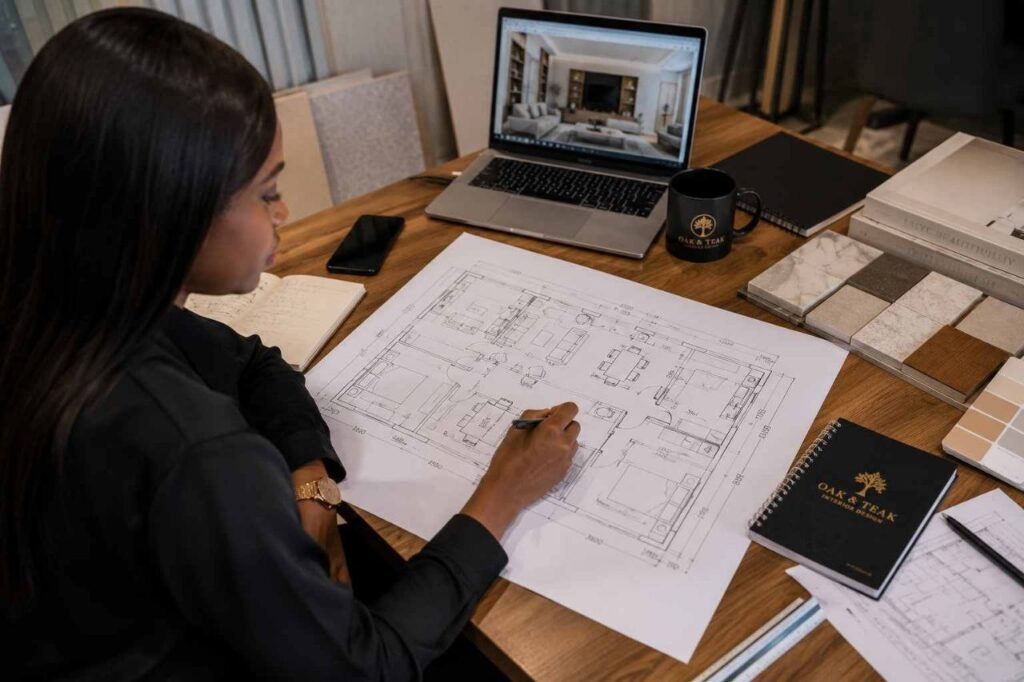
These problems arise when homeowners make decisions without a measured space plan. An interior designer produces a layout of every room before the homeowner makes a single purchase. The designer then confirms that every piece of furniture fits the space, allows adequate circulation, and works proportionally with every other element in the room.
This process does not require complicated planning. It is the foundational service every designer provides, and it prevents the kind of expensive re-purchasing that quietly inflates renovation budgets across the country. We explored the specific scenarios where this is wrong in our guide, Costly Furniture Buying Mistakes Nigerian homeowners make.
How Can an Interior Designer Help You Stay Within Budget?
Question:Can an interior designer help you stay within budget?
Answer:Yes, interior designers help you stay within budget by establishing a clear spending plan before you make any purchases, allocating costs by category, phasing expenditure intelligently, and actively tracking spending against the agreed plan throughout the project.
Budget Planning Before the First Naira Is Spent
The most powerful thing an interior designer does for your budget happens before the renovation starts. It is the budget plan itself.
A solid interior design budget plan does not simply list what things cost. It allocates specific amounts to each category, identifies the highest-risk areas for overspending, sequences purchases in the correct order, and builds in a contingency to protect the project when the unexpected happens. In Nigeria’s construction environment, something unexpected always happens.
At Oak & Teak, we produce a detailed cost framework for every project before we contact any supplier. This document shows clients exactly where their money will go, which expenses they must prioritise, which costs they can phase, and which early warning signs indicate budget pressure. For a full breakdown of how this works in practice, our guide, How to plan, manage, and protect your interior design project budget in Nigeria, covers every stage in detail.
How Designers Prevent Budget Overruns Mid-Project
Budget overruns during renovation in Nigeria most commonly happen because of three recurring patterns: unplanned purchases made on impulse when something catches the client’s eye, corrections required because an earlier decision was wrong, and contractor variations accepted verbally and without documentation.
A designer manages all three actively. They track spending against the agreed plan at every stage, challenge any contractor-proposed changes that have not been justified or documented, and redirect clients away from impulse purchases that fall outside the agreed plan and do not genuinely improve the outcome.
This is active, ongoing budget protection. A designer does not simply give this advice at the start and forget about it. It is one of the clearest ways a designer earns back their fee within a single project, often before the renovation is even halfway complete.
Want to see how Oak & Teak approaches project budgeting from the first conversation? Book an interior design budget consultation and start with a plan, not a guess.
Can an Interior Designer Reduce Renovation Costs?

Question:Can an interior designer reduce renovation costs?
Answer:Yes, an interior designer reduces renovation costs by eliminating rework, negotiating better material prices through established supplier relationships, and specifying materials correctly the first time so nothing needs replacing ahead of schedule.
The Real Cost of Renovation Rework in Nigeria
Rework is the single biggest driver of budget overruns in Nigerian renovation projects. Rework happens when an early project decision turns out to be wrong, forcing contractors to undo and correct completed work. You then pay the contractor twice, purchase materials twice, and spend additional time fixing a problem that proper planning could have prevented.
The most common examples:
- Workers installed the tiles before confirming the electrical points, forcing the electrician to break them later to run the conduit.
- The team had to replaster a finished wall after the client changed their mind about a partition they should have agreed on during the planning stage.
- Contractors applied paint over poorly prepared surfaces, which required a full strip and repaint within twelve to eighteen months.
- The homeowner purchased furniture before confirming the room dimensions, then had to resell it at a loss and buy suitable pieces at full cost.
Each item on that list is entirely preventable. Each one represents money spent twice on the same outcome. An interior designer removes the conditions that produce rework by making the right decisions in the right sequence, before construction commits them. The interior design process in Nigeria is specifically structured to sequence these decisions before spending begins.
Supplier Relationships That Reduce Material Costs
Established interior designers in Nigeria maintain relationships with material suppliers, furniture manufacturers, and specialist contractors that are not available to individual homeowners buying once or twice in their lifetime. These relationships translate to better pricing, priority access to quality stock, and honest advice on what is worth buying and what is not.
At Oak & Teak, our supplier network across Lagos, Abuja, and Port Harcourt means clients access materials at prices and quality levels not available at the retail walk-in rate. For clients considering a full-service project, our turnkey interior design service in Nigeria includes material sourcing and procurement as part of the managed process.
Is It Cheaper to Design Your Home Yourself or Hire an Interior Designer?
Question:Is it cheaper to design your home yourself or hire an interior designer?
Answer:Handling your home design yourself may seem cheaper, but it does not always reduce the overall cost. The cost of mistakes, rework, impulse purchases, and poorly matched materials almost always exceeds the cost of a professional designer’s fee, particularly on renovation projects involving significant investment.
What DIY Interior Design Really Costs in Nigeria
DIY interior design sounds financially sensible, and for very small, low-stakes projects it can work. However, for any renovation involving multiple rooms, significant material investment, or structural work, the hidden costs of doing it yourself consistently exceed what a professional designer charges.
The hidden costs do not arrive as a single large bill. They accumulate gradually and quietly. A wrong estimate led the homeowner to buy extra tiles. They purchased the curtain fabric before anyone confirmed the window dimensions. They also painted the feature wall in a color that looked completely different from the paint card once applied. The light fitting imported from abroad turned out not to be compatible with Nigerian voltage standards.
Individually, each feels like a manageable loss. Together, they represent a significant and completely avoidable budget drain.
Where Professional Design Pays for Itself Most Clearly
It pays for itself most clearly in three situations: large renovation projects with significant material investment, projects that require structural changes, and projects where the homeowner has limited time to manage contractors and suppliers directly.
In each case, the designer’s fee is offset by savings from rework, better material pricing through supplier relationships, and the management value of having one professional responsible for coordinating every trade on site.
For context on what professional design actually costs relative to a typical project budget, our guide on how much interior design costs in Nigeria breaks down realistic fee structures across different project types and budget levels.
How Can You Avoid Overspending on Interior Design?
Question:How can I avoid overspending on interior design?
Answer:You can avoid overspending on interior design by establishing a room-by-room budget before any purchase is made, separating must-haves from nice-to-haves, phasing purchases in the correct order, and working with a designer who tracks spending against the agreed plan throughout the project.
Smart Material Selection That Keeps Costs Down
Not every expensive material is the best choice for every situation. Not every affordable material is the wrong choice either. Cost-effective material selection for interiors is about matching the right material to the right application, regardless of its price tier.
At Oak & Teak, we regularly help clients achieve finishes that look and feel premium by being precise about where investment is genuinely visible and where it is not. In a bedroom, for example, the flooring and ceiling finish dominate the visual impression. Investing appropriately in both creates a room that feels significantly more considered than its budget suggests. Conversely, spending heavily on materials hidden inside wardrobes, behind appliances, or above ceiling boards that nobody ever opens is a budget error that an experienced designer will redirect before money is committed.
This approach is one of the clearest examples of budget-friendly interior planning in Nigeria: not spending less on everything, but spending correctly on what matters and efficiently on what does not.
How Phased Purchasing Protects Your Budget
Phased purchasing is one of the most practical and most underused budget protection strategies available to Nigerian homeowners. Instead of buying everything at once under renovation deadline pressure, a designer plans purchases in order of necessity and confirms prices for the most critical items first.
This approach solves two common problems simultaneously. It prevents the budget from being depleted on early, less essential purchases before the most important ones are committed. It also allows the client to recover financially between phases without stalling the overall project or compromising quality on items that matter most.
Phasing aligns naturally with the structured interior design process in Nigeria, where each stage builds on the one before it and purchasing follows confirmed design decisions rather than preceding them.
Can Hiring an Interior Designer Prevent Renovation Budget Overruns?
Question:Can hiring an interior designer prevent renovation budget overruns?
Answer:Yes. Hiring an interior designer significantly reduces the risk of renovation budget overruns by eliminating rework, formally managing contractor variations, enforcing the agreed spending plan, and producing accurate material estimates that prevent costly over or under-ordering.
Budget overruns are so common in Nigerian renovation projects that most homeowners expect them. The phrase from a contractor, ‘e go cost you more than that,’ has become almost a rite of passage in the home improvement experience. However, budget overruns are not inevitable. They are the predictable result of specific, preventable conditions made early in a project.
Why Most Renovation Budgets Overrun Without a Designer
The most common reasons renovation budgets overrun in Nigeria, in order of frequency:
- No accurate budget plan was produced before work began
- No confirmed design existed before construction started, so decisions were made on-site by the contractor
- Contractor variations were accepted verbally and without documentation, making them uncontestable later
- Materials were purchased in stages without a coordinated specification, resulting in mismatches requiring correction
- Impulse purchases were made mid-project without reference to the remaining budget
An interior designer addresses all five. They create the plan, finalize the design before construction begins, formally document any contractor-proposed changes, establish a consistent material specification from the outset, and track spending against an agreed ceiling throughout the project.
The Comparison Every Homeowner Should See
| Without a Designer | With an Interior Designer |
| Budget estimated loosely before work begins | Detailed cost framework produced per category before any spending |
| Contractor makes decisions on-site by default | All decisions confirmed and documented before construction starts |
| Material mismatches discovered after installation | Single coordinated specification agreed before materials are ordered |
| Variations accepted verbally, disputed later | All contractor variations challenged, documented, and approved in writing |
| Rework costs absorbed silently into the budget | Rework prevented by correct sequencing of design decisions |
| Budget overrun accepted as normal | Spending tracked against the plan throughout the project |
For clients who prefer to have professionals manage all these safeguards on their behalf, our turnkey interior design service in Nigeria covers the full project lifecycle from first brief to final handover, with no stage left unmanaged.
How Does Oak & Teak Interior Approach Budget Planning in Nigeria?

Question:How does Oak & Teak approach budget planning in Nigeria?
Answer: Oak & Teak produces a detailed cost framework for every project before any supplier is contacted. This document allocates spending by category, identifies risk areas, builds in contingency, and serves as the financial reference point for every decision made throughout the project.
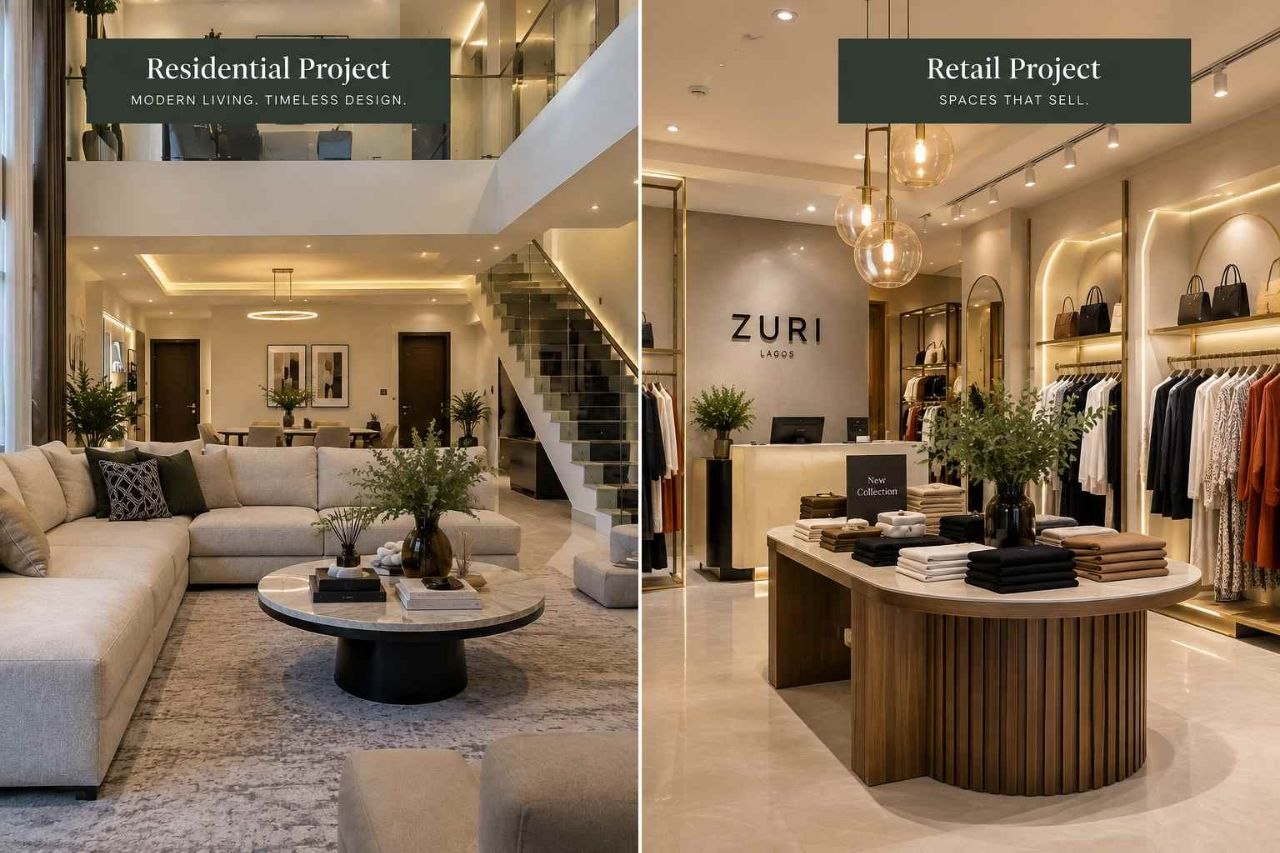
Oak & Teak has delivered residential and commercial projects across Lagos, Abuja, and Port Harcourt, creating tailored interior solutions for clients with diverse budgets and project needs. One consistent finding across all of them: the projects that stay closest to budget are not always the ones with the most money available. They are the ones where the planning was most thorough before spending began.
How Oak & Teak Helps Clients at Every Budget Level
A common misconception is that interior design budget planning in Nigeria is only relevant for high-budget projects. At Oak & Teak, we work with clients furnishing 2-bedroom apartments and clients completing full luxury duplex builds. The planning discipline we apply is consistent regardless of scale.
For every client, we begin with a budget reality check: what they want to achieve, what their current budget can realistically deliver at current market prices, and what, if anything, needs to be phased or reprioritized to close that gap without compromising quality on the decisions that matter most.
This conversation, held before any money is committed, is one of the most valuable things an interior designer does. It is also one of the hardest things to do clearly and objectively without professional experience.
Where to Start If You Are Ready to Work With Oak & Teak
If you are considering a renovation or new build and want to understand what professional design planning looks like in practice, our guide on How to choose the right interior designer for your home in Nigeria walks through exactly what to look for and what questions to ask before committing to any company.
If you are already at a confident stage and want to see completed examples of how we have delivered projects at different budget levels, our residential project portfolio shows the range and depth of work across multiple cities and project types.
And if you want to understand all the signs that suggest you are at the right point to bring a designer in, rather than waiting longer and spending more in the meantime, our blog on 8 signs you are ready to hire an interior designer lays it out with the kind of honesty that saves people from expensive delays.
Ready to take control of your renovation costs and plan your project with confidence? Book an interior design consultation with Oak & Teak Interior and get a clear, honest plan before a single naira is committed.
Final Thoughts: Your Friend Was Right
The homeowner from our opening story eventually finished their renovation. It cost more than it should have, took longer than it needed to, and required several purchases that a single planning session would have made unnecessary.
Now that you understand exactly how an interior designer can save you money through precise planning, smart material selection, rework prevention, and active budget management, you have everything you need to make a more informed decision than they did.
A designer does not cost you money. A designer protects the money you were going to spend anyway and makes sure it delivers exactly what you intended.
Your friend was right. And unlike them, we will say it to your face: book a consultation with Oak & Teak Interior today and start your renovation with a plan that protects both your vision and your budget.
Frequently Asked Questions (FAQs)
Q: Can an interior designer actually save you money?
A: Yes, an interior designer saves you money by preventing the costly mistakes that inflate renovation budgets. Precise budget planning, correct material specification, and project coordination that eliminates rework typically deliver savings that comfortably exceed the designer’s fee.
Q: Can an interior designer help you stay within budget?
A: Yes, interior designers establish a detailed cost framework before any purchase is made, track spending against the agreed plan throughout the project, and actively challenge decisions that risk exceeding the budget ceiling.
Q: How do interior designers prevent costly mistakes?
A: Interior designers prevent costly mistakes through accurate space planning that confirms furniture fits before purchase, informed material selection based on performance rather than appearance alone, and coordinated project management that keeps every trade working from a single approved plan.
Q: Can an interior designer reduce renovation costs?
A: Yes, designers reduce renovation costs by eliminating rework, negotiating better material prices through established supplier relationships, and ensuring materials are specified correctly the first time so nothing needs replacing ahead of schedule.
Q: Is it cheaper to design your home yourself or hire an interior designer?
A: In most cases, it is not cheaper to design your home yourself. The accumulated cost of mistakes, impulse purchases, mismatched materials, and rework consistently exceeds the professional design fee on any renovation project of meaningful scale.
Q: How can I avoid overspending on interior design?
A: Establish a room-by-room budget before any purchase is made, separate must-haves from nice-to-haves, phase purchases in the correct order, and work with a designer who tracks spending against the agreed plan rather than providing a budget at the start and walking away.
Q: Can hiring an interior designer prevent renovation budget overruns?
A: Yes, hiring an interior designer significantly reduces the risk of budget overruns by confirming designs before construction begins, formally managing contractor variations, producing accurate material estimates, and tracking spending throughout the project.
Q: How do interior designers save you money in Nigeria specifically?
A: In Nigeria’s construction environment, designers save money primarily by preventing rework caused by uncoordinated trades, sourcing materials through supplier relationships at better pricing than retail, and enforcing the agreed budget plan in a context where contractor variations and impulse changes are common.